The Children's Fire Safety Week is fast approaching in May. Among the topics covered during this time is having an escape plan should there be a fire emergency your home. Here are some ideas to think about in creating your plan. This information comes from the National Fire Protection Association.
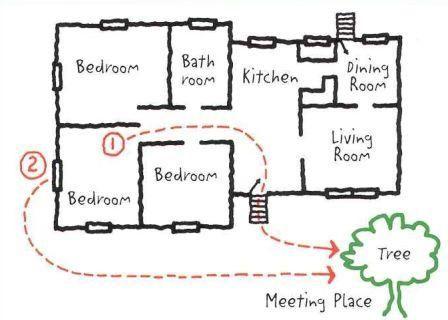
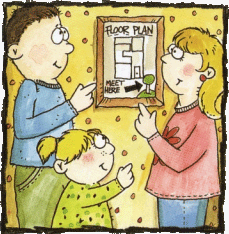
To begin developing a home fire escape plan with all members of your family, draw a map of your home. You can download How to Make a Fire Escape Plan at www.nfpa.org/homeescape to get started, or simply make a map on a piece of paper. Then, use this checklist to make sure your escape plan includes all the elements needed to ensure your household’s safety from fire. (links provided below)
* I have made a map of our home indicating all windows and doors that can be used to get outside if the smoke alarm sounds.
* All members of my household have walked through the home with me to identify two ways out of each room.
* The home fire escape plan includes two ways out of every room in the home
(usually a door and a window).
* All ways out of each room and the home are clear, free of clutter and can be
opened easily.
* Security bars on doors and windows have a quick-release device so they can be used to get outside in case of a fire.
* There is a meeting place (a tree, neighbor’s home, street light) outside in front of our home where everyone knows to meet upon exiting.
* Our house number can be clearly seen from the street.
* Our plan includes the local emergency telephone number (or 9-1-1) to be contacted immediately upon leaving the home.
* There are working smoke alarms in all required locations throughout our home; there’s at least one on every level of the home (including the basement), inside all bedrooms and outside each sleeping area.
* We all know what the smoke alarm sounds like, and what to do when we hear it.
* We have practiced our home fire escape drill, and will continue to do so at least twice a year.
* Everyone in our home knows how to get low and go under smoke, in case we need to escape through smoke.
* We all know if the smoke alarm sounds, get outside of the home and stay outside, and understand that we should alert the fire department to any people or pets trapped inside.
You're never too young or too old to start developing your escape plan so get together with your kids today and start your planning. |


 Add a Comment
